
Ask five trainers how much protein you need, and you’ll get five different formulas…usually with conflicting math and a side of supplement marketing.
The truth is, the number that’s right for you depends less on a magic ratio and more on a handful of variables most people overlook: your goals, your age, your lean mass, and what your body is going through right now.
Below, four nutrition and training experts share the formulas they actually use with clients, and the one factor each says matters most.
Start With a Simple Range Based on Your Goals
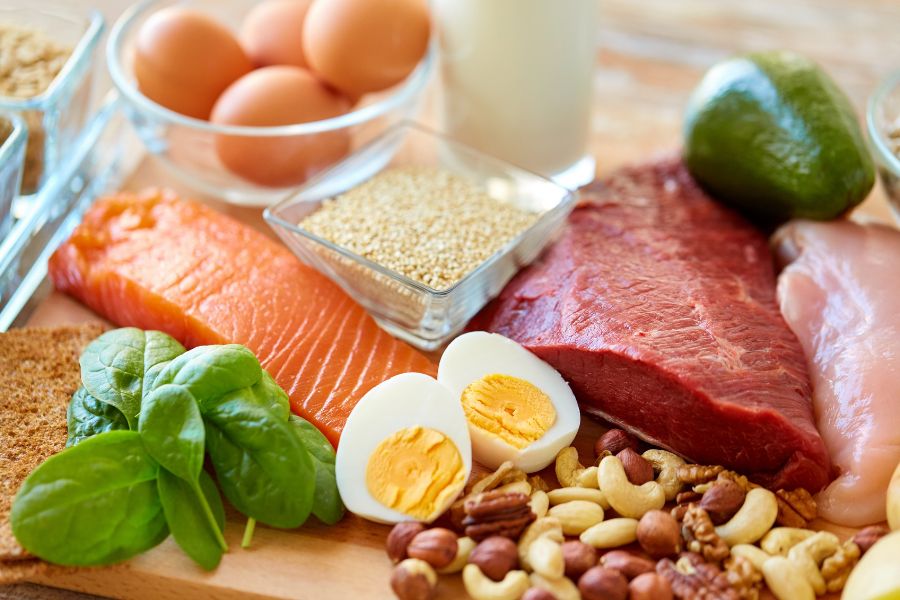
Most people massively overcomplicate protein intake, and the fitness industry certainly hasn’t helped here.
As recommended by the Institute of Performance Nutrition, for the majority of active people, a good starting point is around 1.2-1.6 g of protein per kilogram of body weight per day.
You don’t need to chase extreme numbers or force down endless protein shakes. This sensible protein range is well-supported in the research for supporting muscle repair, recovery and performance.
The key is always consistency and not perfection. Hitting roughly within that range most days will do far more for your progress than obsessing over an exact gram target.
If I had to highlight one factor that should influence that number, it’s your overall goal and your training demand.
Someone lifting weights regularly or trying to build muscle will likely benefit from the higher end of that range. Someone who’s active but has a slightly lower training intensity can sit comfortably towards the lower end of that recommendation.
It’s also worth saying that more isn’t always better. Once you’re in that optimal range, pushing protein higher doesn’t magically accelerate results.
It just makes your diet harder to stick to (and much more expensive).
Keep it simple, stay consistent and build your diet around foods you actually enjoy eating.
Michael Ulloa, Personal Trainer, Michael Ulloa
Multiply Your Goal Weight, Then Adjust for Age
Honestly, the formula isn’t complicated. Take your goal weight in pounds, multiply by between 0.7 and 1, and that’s your protein target for the day in grams.
The big factor most people miss is age. A 30-year-old can get by on less.
A 60-year-old can’t, because the body just isn’t as good at putting protein to work anymore, so the older you get, the more you need to keep the same amount of muscle on your frame.
Gerard Washack, Business Owner, Strong Republic Personal Training
Older Athletes Need More Protein, Not Less

Many athletes have used 0.8 grams of protein per kg of body weight as a guideline; however, this is a bare minimum that should be enough to keep from developing a protein deficiency and nothing more.
There is scientific evidence that recommends an intake of 1.6-2.2 grams of protein per kg of body weight per day for active adults, based upon the amount of physical activity performed by the athlete and what they hope to achieve through exercise.
One major variable that many athletes do not consider when trying to determine how much protein to consume is age.
The older you get, the less efficiently your body can convert dietary protein into muscle mass.
An older active adult (40’s/50’s) will actually require more protein than a younger version of themselves performing the same type of training, not less.
Blen Tesfu, MD, Welzo
Base It on Lean Mass, Not Total Body Weight
Practical guideline: adults should base protein intake on body weight, typically 0.8 to 1.2 grams per pound of lean body mass, depending on activity level and goals.
For example, someone training regularly or trying to preserve muscle during weight loss may need to stay toward the higher end of that range.
Alongside the body’s activity, however, it’s important to look at the metabolic condition.
If someone is dieting, recovering from long-term calorie restriction, using medications that affect appetite, or experiencing muscle loss, their protein needs increase, even if their workouts don’t.
Protein is about building muscle, yes, but it’s also about preserving function, supporting hormones, and helping the body stay stable during change.
At the same time, more is not always better. For people with lower physical activity levels, consistently overeating protein can place unnecessary stress on the body and may contribute to elevated uric acid levels in some individuals.
There isn’t one perfect formula for everyone. That’s why protein intake should be balanced and not blindly maximized.
Balance matters.
Don’t think, “eat as much protein as possible.” Think, “eat the right protein, in the right amount for your body.”
Gabrielle Sadkhin, Principal, Sadkhin Therapy
The Bottom Line
If you zoom out across all four experts, a few themes line up.
For most active adults, 1.2 to 1.6 grams of protein per kilogram of body weight (roughly 0.7 to 1 gram per pound) is a sensible starting target — with serious lifters and people trying to build muscle pushing toward the higher end.
The variable nearly every expert flagged is age. Once you’re past your 30s, your body becomes less efficient at turning dietary protein into muscle, so older athletes generally need more, not less.
Body composition and what you’re going through metabolically also matter. Dieting, recovering, or losing weight all increase your protein needs, even if your training volume stays the same.
Pick a formula that fits your situation, stay consistent, and don’t fall into the “more is always better” trap. The right number is the one you can hit most days from foods you actually enjoy.
Leave a Reply